

Common Installation and Selection Mistakes With Bi-Fold and Multi-Slide Doors
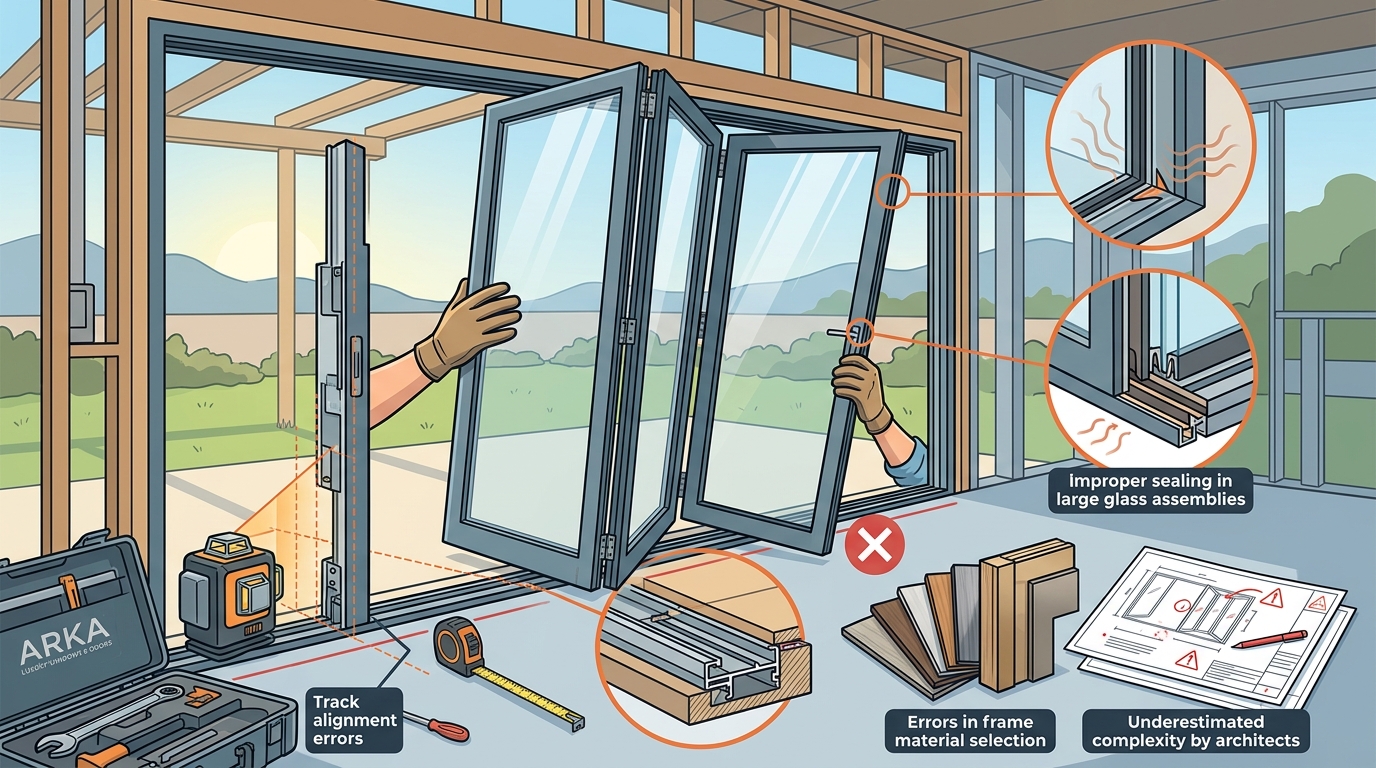
Homeowners and architects frequently underestimate the complexity of large-format opening systems. According to energy efficiency reports, improper sealing in large glass assemblies can lead to significant thermal loss, undermining the very purpose of upgrading to high-performance glazing. The transition from traditional fixed windows to dynamic bi-folding or multi-slide systems introduces mechanical variables that standard carpentry cannot address. A single error in track alignment or frame material selection can compromise the structural integrity and aesthetic value of the entire project. This guide details the critical errors to avoid when specifying and installing these systems. (Discover Our Luxury Windows)
The Critical Role of Track Alignment and Foundation
The most frequent installation failure occurs at the threshold. Bi-fold doors rely on a precise bottom track to guide the panels. If the subfloor is not perfectly level, the doors will drag, bind, or fail to latch securely. This is not merely an annoyance; it is a structural compromise. Architectural Record data shows that misaligned tracks are the primary cause of premature hardware failure in high-traffic commercial and residential applications.
When selecting a system, you must consider the floor thickness. A standard 3/4-inch track may not suffice for thick stone or tile installations. ARKA offers minimalistic slide systems that conceal the sash entirely, but these require exact millimeter-level precision during the framing phase. Failing to account for the final floor finish height is a costly mistake that often requires breaking concrete to correct.
Furthermore, the threshold design must balance water drainage with thermal bridging. A poorly designed threshold allows water infiltration during heavy storms. High-end systems utilize thermally broken thresholds that direct water away from the interior while maintaining insulation values. Always verify that the installer has experience with large-format sliding systems, as standard door installers often lack the specialized tools required for this task.
Material Selection: Aluminum vs. Vinyl vs. Wood
Choosing the wrong frame material is a common selection error. Each material has distinct thermal, aesthetic, and structural properties that must align with your climate and design goals.
Thermal Aluminum is the preferred choice for modern luxury homes. It offers slim sightlines that maximize glass area, providing unobstructed views. However, aluminum is a conductive material. Without a thermal break, it transfers heat and cold efficiently, leading to condensation. ARKA’s Modern Line and Luxury Line windows utilize advanced thermal aluminum profiles to mitigate this issue, ensuring high performance without sacrificing the sleek aesthetic.
Vinyl frames are often chosen for their lower cost and inherent insulation properties. However, vinyl expands and contracts with temperature changes. In large bi-fold applications, this movement can cause the frame to warp, leading to sealing failures. Vinyl is also limited in color options and cannot achieve the slim profiles required for contemporary minimalist designs.
Wood frames offer superior natural insulation and a classic aesthetic. However, they require significant maintenance to prevent rot and warping. ARKA addresses this by offering wood frames with aluminum cladding. This combination provides the warmth of wood on the interior and the durability of aluminum on the exterior. This hybrid approach is ideal for homeowners who want the look of wood without the high maintenance burden.
Glazing and Thermal Performance Pitfalls
Many buyers focus on the door mechanism and neglect the glass. The glass constitutes over 90% of the door’s surface area and dictates its energy performance. A common mistake is selecting single-pane or standard double-pane glass for large expanses. Energy Star guidelines indicate that upgrading to triple glazing can reduce energy loss by up to 30% in extreme climates.
ARKA’s Luxury Line windows and doors feature dual and triple glaze glass packages. These packages often include low-emissivity (Low-E) coatings and argon gas fills. Low-E coatings reflect infrared light, keeping heat inside during winter and outside during summer. Argon gas, being denser than air, reduces convective heat transfer between the panes. Ignoring these specifications results in a door that looks beautiful but performs poorly, leading to higher utility bills and potential condensation issues.
Another critical factor is the spacer material. Traditional aluminum spacers create a thermal bridge at the edge of the glass. Warm-edge spacers, made from composite materials, reduce this heat loss. For high-performance projects, specifying warm-edge spacers is essential to maintaining the overall U-value of the assembly.
Structural Integrity and Header Support
Bi-fold and multi-slide doors are significantly heavier than standard doors. The structural opening must be designed to support this weight. A common mistake is under-sizing the header beam. If the header is too weak, it will sag over time, causing the doors to misalign and the seals to fail. This is particularly true for wide spans exceeding 10 feet.
When planning the installation, consult with a structural engineer to determine the correct beam size. The header must be capable of supporting the roof load while allowing for the large opening. Additionally, the sill must be properly flashed to prevent water intrusion. Improper flashing is a leading cause of rot in the surrounding wall structure. Ensure that the installer uses high-quality flashing tape and sealants compatible with the frame material.
For multi-slide systems, the track must be anchored securely to the structure. Standard drywall anchors are insufficient. The track must be screwed directly into the framing studs or a reinforced header. This ensures that the doors remain stable even when subjected to high winds or frequent use.
Hardware Quality and Long-Term Durability
The hardware is the heart of any bi-fold or multi-slide system. Cheap hardware leads to frequent repairs and eventual replacement. Look for systems that use high-grade stainless steel or brass components. These materials resist corrosion and wear, ensuring smooth operation for decades.
ARKA partners with leading European manufacturers such as SIEGENIA and MACO to provide premium hardware. These brands are known for their precision engineering and durability. SIEGENIA, for instance, is renowned for its tilt-and-turn mechanisms and robust pivot systems. MACO offers advanced locking mechanisms that enhance security and weather sealing.
When selecting a door, ask about the warranty on the hardware. A reputable manufacturer will offer a substantial warranty, reflecting their confidence in the product. Also, consider the ease of maintenance. High-quality hardware is designed to be adjustable, allowing you to correct minor misalignments without professional help. Regular lubrication of the rollers and tracks is also essential for long-term performance.
Comparison of Bi-Fold vs. Lift & Slide Systems
Choosing between bi-fold and lift & slide doors depends on your specific needs. Both systems offer large openings but function differently.
| Feature | Bi-Fold Doors | Lift & Slide Doors |
|---|---|---|
| Opening Style | Folds back in accordion style | Glides on a track with lifting mechanism |
| Maximum Width | Up to 12 feet when folded | Up to 16 feet or more |
| Operation Effort | Requires moderate effort | Effortless due to lifting mechanism |
| Seal Quality | Good, but multiple contact points | Excellent, fewer contact points |
| Best For | Connecting indoor/outdoor spaces | Large expanses and heavy panels |
Bi-fold doors are ideal for creating a seamless connection between interior and exterior spaces. They allow you to completely open the wall, blending the rooms together. However, the multiple panels can create visual clutter when folded. Lift & slide doors, on the other hand, are perfect for wide spans. The lifting mechanism reduces friction, making it easy to move heavy panels. ARKA’s Lift & Slide doors feature a system of levers and wheels that lift the panel off the sill, enabling movement with very little effort.
Key Takeaways
- Precision is Paramount: Track alignment must account for final floor finishes to prevent binding and wear.
- Material Matters: Thermal aluminum offers slim profiles, while wood-clad options provide classic aesthetics with modern durability.
- Glazing is Critical: Triple glazing and Low-E coatings are essential for energy efficiency in large-format doors.
- Structural Support: Under-sized headers are a common cause of long-term failure in wide-span installations.
- Hardware Quality: Premium hardware from manufacturers like SIEGENIA ensures longevity and smooth operation.
- System Selection: Bi-fold doors offer maximum openness, while lift & slide systems handle larger weights and spans more easily.
- Professional Installation: Standard door installers may lack the expertise required for complex multi-slide systems.
Frequently Asked Questions
What is the difference between bi-fold and multi-slide doors?
Bi-fold doors fold back in an accordion style, creating a compact stack. Multi-slide doors glide along a track, allowing panels to stack to one or both sides. Multi-slide systems are better for wider spans and heavier panels.
How do I choose the right frame material?
Choose thermal aluminum for modern, slim profiles. Choose wood-clad for traditional aesthetics with low maintenance. Choose vinyl for budget-conscious projects, but be aware of its limitations in large sizes.
Are bi-fold doors energy efficient?
Yes, when specified correctly. High-performance bi-fold doors feature thermal breaks, low-E glass, and tight seals. ARKA’s Luxury Line doors deliver outstanding thermal performance to keep your home comfortable.
What is the lifespan of bi-fold door hardware?
With proper maintenance, premium hardware can last 20 years or more. Regular lubrication and adjustment are key to extending the life of the rollers and tracks.
Can I install bi-fold doors myself?
No, professional installation is required. The precision needed for track alignment and structural support makes DIY installation risky and likely to result in poor performance.
What is a thermal break?
A thermal break is a non-conductive material inserted between the interior and exterior parts of a metal frame to reduce heat transfer. It is essential for aluminum doors to prevent condensation and energy loss.
How wide can bi-fold doors get?
Bi-fold doors can span up to 12 feet or more, depending on the number of panels and the system design. ARKA offers custom solutions to meet specific architectural requirements.
Transform Your Living Area Today
Avoiding these common mistakes ensures that your investment in bi-fold or multi-slide doors delivers both beauty and performance. ARKA Luxury Windows & Doors specializes in custom-built high-quality windows and doors, crafted to perfection. Our team provides expert guidance on selecting the proper design and materials for your project. Schedule a consultation at your home to discuss your needs and receive a personalized quote. Experience the difference of European craftsmanship and innovative technology.