

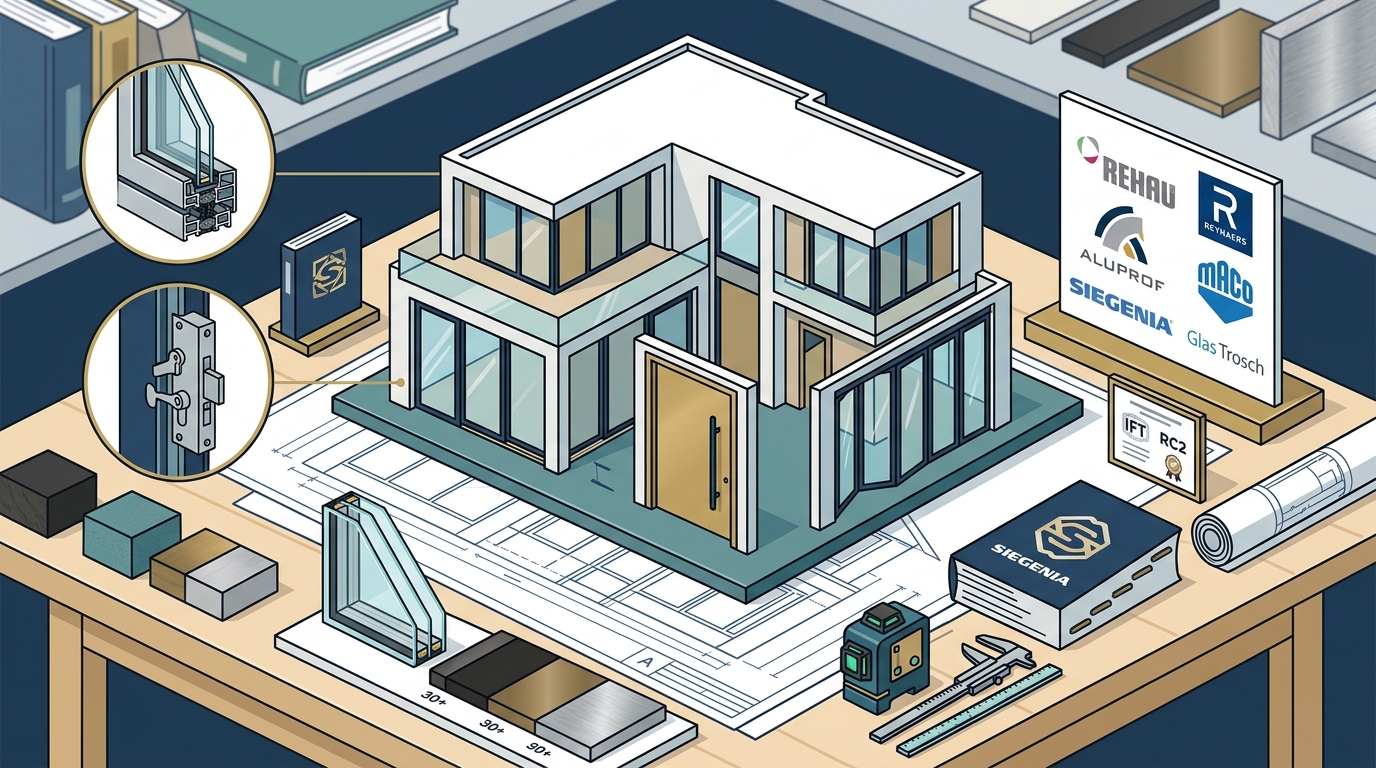
High-end builders in Orange County typically select European door systems from manufacturers like REHAU, REYNAERS, ALUPROF, SIEGENIA, MACO, and Glas Trosch. These brands provide the thermal performance, security, and aesthetic precision required for luxury residential projects. This guide explains how to evaluate these options, verify credentials, and navigate the installation process.
How to Choose: Separating Quality from Cost
Choosing a European door brand requires looking beyond aesthetics to structural integrity. A premium door is a precision-engineered system where the frame, hardware, and glass work together. You must evaluate the frame material first. Aluminum offers superior strength and slim profiles, while wood provides warmth and sustainability. Vinyl is durable but less customizable for ultra-large spans.
Frame Material and Thermal Breaks
Thermal break aluminum is a continuous barrier between the inside and outside window or door frames to greatly reduce noise, cold, and heat energy. This technology uses a reinforced polyamide bar between the inside and outside aluminum profiles, creating an insulated barrier within the window frame. Without this, aluminum conducts heat rapidly, leading to higher energy bills and condensation issues.
Hardware and Security
Hardware is the functional heart of the door. Look for multi-point locking systems from established manufacturers like SIEGENIA or MACO. These systems engage locks at multiple points along the frame, providing superior security compared to standard single-point locks. The quality of the handle and its internal mechanism determines the longevity of the operation.
What to Ask: Questions Before Committing
Before signing a contract, you need specific answers regarding performance and support. Ask the supplier about the U-factor of the glass package. You should also inquire about the warranty terms for both the frame and the hardware. A reputable supplier will provide clear documentation on these metrics.
Performance Metrics
Ask for the specific U-factor and SHGC (Solar Heat Gain Coefficient) ratings. For luxury homes in California, a low U-factor is critical for maintaining interior comfort. Ask if the glass package includes low-E coatings to reflect infrared light. This directly impacts your energy efficiency and interior comfort levels.
Support and Maintenance
Ask who performs the installation. Is it a licensed contractor or the manufacturer's own team? Ask about the maintenance schedule. Moving hardware like hinges and locks should be lubricated every two years, and yearly in coastal environments. Knowing the expected maintenance burden helps you budget for long-term care.
How to Verify: Checking Credentials
Claims of European quality must be backed by verifiable certifications. Do not rely on marketing brochures alone. Check for certifications from recognized bodies like IFT Rosenheim. This German institute tests and certifies the performance of building components. If a supplier claims a door is certified, ask for the specific certificate number.
Certification Bodies
IFT Rosenheim is a leading independent testing and certification body for building components. Their certification ensures that the product meets strict standards for weather resistance, thermal insulation, and security. Another key certification is RC2, which indicates a high level of resistance against burglary. Verifying these credentials protects your investment.
Supplier Reputation
How It Works: The Process and Timeline
The process of installing European doors involves several distinct phases. It begins with a consultation and measurement. Then, the order is placed with the manufacturer. Production typically takes 12 to 14 weeks for standard orders. Express delivery options may reduce this to 7 to 8 weeks, but often at an additional cost. Finally, professional installation and final adjustments occur.
Consultation and Measurement
A professional surveyor visits the site to take precise measurements. This step is critical because European doors are custom-made to exact specifications. Any error in measurement can lead to fit issues. The surveyor also assesses the structural integrity of the opening to ensure it can support the weight of the door.
Production and Delivery
Once the order is confirmed, the doors are manufactured in Europe. The lead time is usually around 12 to 14 weeks for the US market. After production, the doors are shipped to the local warehouse. Delivery is scheduled in coordination with the installation team to ensure the site is ready.
What It Costs: Price Drivers
The cost of European doors is driven by several factors. The primary driver is the size of the door. Larger panels require more material and stronger hardware. The second driver is the frame material. Aluminum is generally more expensive than vinyl but offers better performance. The third driver is the glass package. Triple glazing and specialized coatings increase the cost but improve energy efficiency.
Customization and Finishes
Custom finishes and shapes add to the price. Over 450 different shades and finishes are available, including metallic, anodized, and wood grain options. Special shapes like arches or circles require additional manufacturing steps. Bi-color options, where the exterior and interior have different colors, also add to the cost.
Installation Complexity
Installation costs vary based on the complexity of the project. Retrofitting a door into an existing opening is more complex than installing it in a new construction. The need for structural modifications or electrical work for smart home integration also affects the final price.
What Goes Wrong: Common Mistakes
Several common mistakes can compromise the performance of European doors. The first is improper installation. If the door is not installed level and plumb, it will not operate smoothly. The second is neglecting maintenance. Failure to lubricate hardware and clean tracks can lead to premature wear. The third is choosing the wrong glass package for the climate.
Installation Errors
Improper installation is the most common cause of door failure. If the frame is not secured correctly, it can shift over time. This leads to misalignment and difficulty in opening and closing the door. Always ensure that the installation is performed by licensed and experienced contractors.
Maintenance Neglect
Windows and doors require regular care. Cleaning the glass with mild dish soap and water is essential. Avoid using petroleum-based cleaners or abrasive pads. Inspect and clean weather seals and gaskets every 12 months to maintain airtightness. Neglecting these steps can void the warranty.
Versus Alternatives: European vs. Domestic
Design and Aesthetics
European doors often feature slim profiles and minimalist designs. This allows for larger glass areas and more natural light. Domestic doors may have thicker frames and less design flexibility. For luxury homes, the aesthetic appeal of European doors is a significant factor.
Performance and Durability
European doors are tested to withstand extreme weather conditions. They offer superior sound and thermal insulation. Domestic doors may not meet the same performance standards. For homes in noisy or extreme climates, European doors provide a better solution.
For a Specific Situation: Coastal Luxury Homes
For luxury homes in coastal areas of Orange County, specific considerations apply. Salt air and high humidity can corrode hardware and frames. Choose aluminum doors with high-quality anodized or powder-coated finishes. These finishes resist corrosion and UV damage. Select hardware with stainless steel components to prevent rust. Use triple glazing with enhanced sound insulation to block out coastal noise.
Material Selection
Hardware and Seals
Use compression EPDM rubber gaskets for reliable sealing. EPDM offers excellent resistance against aging, wear, wind, weather, ozone, and ultraviolet light. Double or triple seals improve sound, smoke, water, and thermal isolation. Ensure that the hardware is designed for coastal use and requires minimal maintenance.
Rules and Protections: Warranties and Standards
Understanding the warranty and applicable standards is crucial. A limited warranty protects you against defects in materials or workmanship. It covers hardware that breaks due to a manufacturing defect and sealed glass that develops fogging. It does not cover damage from misuse or failure to follow care instructions. Always read the warranty terms carefully.
Warranty Coverage
ARKA provides a 10-year limited warranty. This covers defects in materials and workmanship. It ensures that if a component fails under normal use, it will be repaired or replaced. The warranty applies only when the product is properly installed and maintained. Keep records of all maintenance and inspections.
Building Codes
Local Specifics: Orange County and Los Angeles
Local conditions in Orange County and Los Angeles influence door selection. The climate is generally warm and dry, but coastal areas experience humidity and salt air. Choose doors with high solar heat gain coefficients to manage heat gain. Use low-E coatings to reflect infrared light. For inland areas, consider noise insulation if the home is near busy roads.
Climate Considerations
Southern California experiences a wide range of temperatures. Doors must perform well in both warm and cool conditions. Thermal break aluminum windows and doors deliver outstanding thermal performance. They keep your home cooler in the warm summer months while reducing heating costs in the winter. Choose a glass package with a U-factor less than 0.12 for optimal performance.
Local Support
Timing: When to Act
Timing is critical for luxury door projects. Start the process early to account for production and delivery times. Standard lead times are 12 to 14 weeks. Express delivery can reduce this to 7 to 8 weeks. Plan your project schedule accordingly. Coordinate with your architect and contractor to ensure that the site is ready for installation when the doors arrive.
Seasonal Considerations
Consider the season when planning installation. Spring and fall are ideal times for installation. The weather is mild, and the site is more accessible. Avoid installing during extreme weather conditions. This ensures a smoother installation process and better results.
Project Coordination
Coordinate with all parties involved in the project. This includes the architect, contractor, and supplier. Ensure that everyone is on the same page regarding timelines and expectations. Regular communication helps to avoid delays and misunderstandings. A well-coordinated project leads to a successful outcome.
Results Over Time: Long-Term Outcomes
European doors provide long-term benefits. They maintain their performance and appearance over time. With proper care, they can last for decades. The thermal performance remains consistent, leading to lower energy bills. The aesthetic appeal also remains, adding value to the home. Regular maintenance ensures that the doors continue to operate smoothly.
Energy Efficiency
Energy efficient double or triple pane windows and doors lower utility bills. They reduce the load on heating and cooling systems. This leads to significant savings over time. The investment in high-quality doors pays off through reduced energy costs. It also contributes to a more sustainable home.
Resale Value
Key Takeaways
- Choose European door brands with verified certifications like IFT Rosenheim and RC2.
- Ask specific questions about U-factor, SHGC, and warranty terms before committing.
- Verify supplier credentials and check for a track record in the region.
- Plan for a lead time of 12 to 14 weeks for standard orders.
- Cost is driven by size, material, glass package, and customization.
- Avoid common mistakes like improper installation and maintenance neglect.
- European doors offer superior precision, design, and thermal performance.
- For coastal homes, choose aluminum with high-quality finishes and hardware.
Frequently Asked Questions
What is Thermal break Aluminum?
The thermal break is a continuous barrier between the inside and outside window/door frames to greatly reduce noise, cold, and heat energy. Thermal break technology uses a reinforced polyamide bar between the inside and outside aluminum profiles, creating an insulated barrier within the window frame.
Do you offer pocket door options?
Yes, we have pocket options for our Sliding MB59 system, Slim Patio 68 system, and Lift Slide 130 and 155 systems.
What kind of paint do you use?
We have 3 different types of finishes: Anodized, Powder coated, and Wood Grain. Powder Coat has 3 different types: Structural, Glossy, and Matte.
Do you offer retrofit installation?
Yes, it all depends on the system you are looking to get.
Are there faster lead times available?
Yes we can do aircraft delivery but it will be at your expense. Lead time = 7-9 weeks with aircraft.
Can I install it myself?
Yes, depending on the construction.
Can I change my order?
Yes, only within 3 days of your order.
What is the lead time?
Lead Time is usually around 12-14 weeks for the US. For some products, we have an Express delivery for 7-8 weeks.
Conclusion
Selecting the right European door brand for a luxury home in Orange County requires careful evaluation of materials, performance, and supplier credentials. By asking the right questions, verifying certifications, and planning for the timeline, you can ensure a successful installation. ARKA Luxury Windows & Doors offers a wide range of European door systems, including bi-folding, pivot, and sliding doors. Our team provides expert consultation and white-glove installation. To plan your project, for a free consultation.