
What Factors Make Custom Glass Sliding Doors More or Less Expensive?
Custom glass sliding door costs fluctuate based on frame material, glass thickness, hardware complexity, and opening mechanisms. Premium aluminum systems with thermal breaks and motorized operation command higher prices than standard vinyl sliders. Understanding these variables helps homeowners budget accurately for high-performance indoor-outdoor living spaces.
Frame Material and Profile Depth
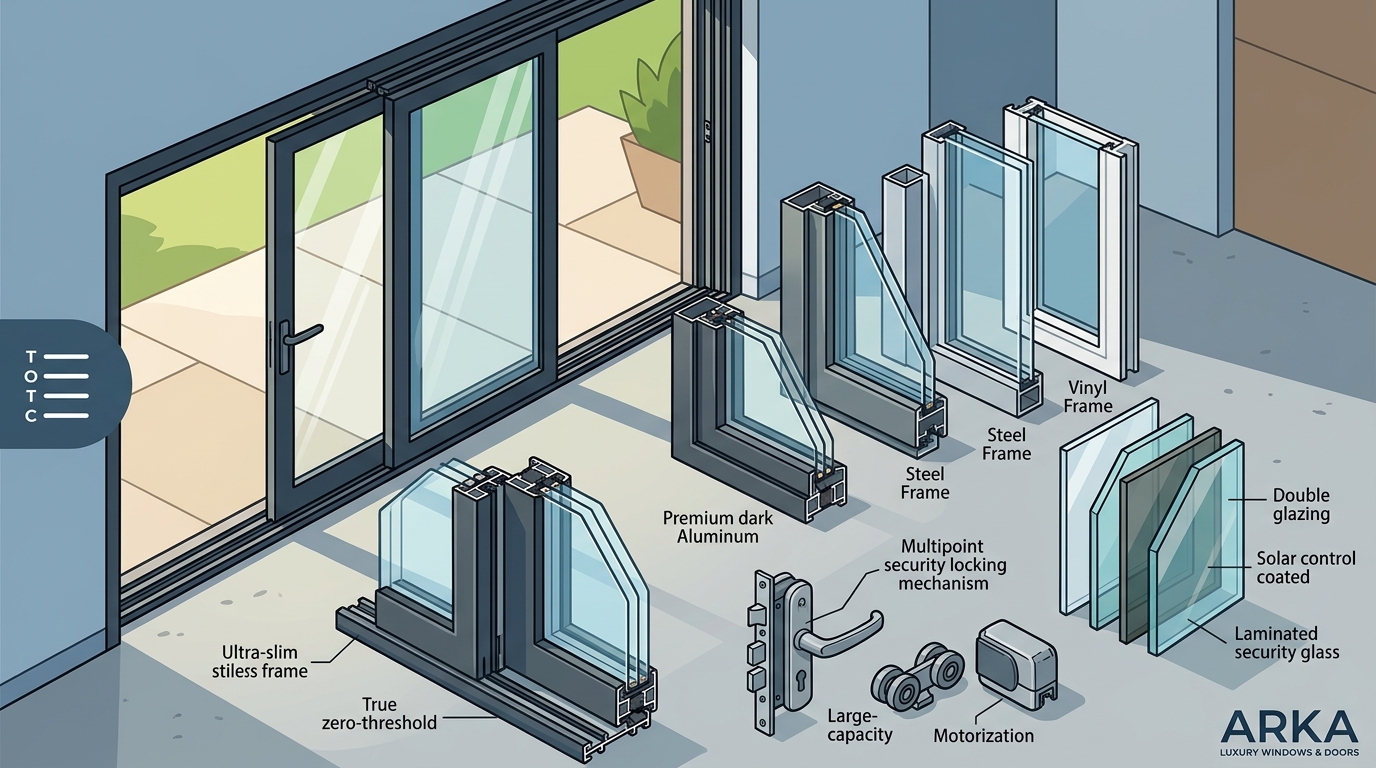
The primary cost driver for any sliding door is the frame material and its structural depth. Aluminum is a thermally broken aluminum window and door system that provides superior strength-to-weight ratios compared to vinyl or wood. Deeper profiles, such as the 80mm system depth found in high-end sliding systems, allow for thicker glass packages and better insulation. This structural robustness is necessary for oversized panels but increases manufacturing complexity and material costs.
ARKA Luxury Windows & Doors utilizes premium aluminum profiles from European manufacturers to ensure stability and resistance against deformation. While vinyl frames are generally more affordable, they may lack the structural integrity required for ultra-wide or ultra-tall glass panels. Aluminum frames support heavier glass loads without warping, making them the standard for luxury custom applications.
Glass Specifications and Thermal Performance
Glass accounts for a significant portion of the total door cost, particularly when high-performance glazing is required. Standard double-pane glass is the baseline, but custom projects often require triple glazing or specialized coatings. The glazing capacity of a sliding system determines how thick the glass package can be, directly impacting thermal and acoustic performance.
For example, systems capable of accommodating up to 30mm of glazing allow for optimal thermal breaks and sound insulation. Homeowners in coastal areas or those seeking maximum quiet often opt for enhanced sound insulation glass or solar-protective coatings. These specialized glass packages increase the unit price but provide long-term energy savings and comfort. ARKA offers glazing options with U-factors less than 0.12, ensuring that the glass package meets the highest American standards for energy efficiency.
Hardware and Opening Mechanisms
The mechanism used to open and close the door significantly influences the final price. Traditional sliding doors use static rails and rollers, which are simpler and less expensive to manufacture. However, these systems can suffer from friction and seal wear over time. Lift-slide mechanisms, which lift the door off the track before sliding, offer smoother operation and better water tightness but require more complex hardware.
Motorized systems represent the highest tier of hardware costs. A motorized opening system for sashes up to 700 kg involves precision engineering, sensors, and control interfaces. ARKA provides options for both manual and motorized operation, allowing clients to balance budget with convenience. The choice between a standard roller system and a high-end lift-slide or motorized mechanism can vary the hardware cost by several thousand dollars per panel.
Dimensions and Custom Configurations
Standard sizes are typically the most cost-effective, while custom dimensions drive prices up. Sliding doors are available in a multitude of configurations, including corner openers and pocket systems. A pocket door system, where the sash disappears into the wall cavity, requires precise engineering and additional structural modifications to the building envelope. This complexity adds to the fabrication and installation costs.
Dimensions also play a critical role. Doors capable of reaching up to 2.5m wide and 3m high require specialized manufacturing processes. All glass is pre-bonded into the frames during manufacture to ensure stability for these large formats. ARKA serves architects and homeowners across Orange County and Los Angeles, offering custom configurations that fit specific architectural visions. The more unique the dimension or configuration, the higher the per-unit cost due to reduced economies of scale.
Finishes and Aesthetic Customization
The visual finish of the door is another key cost factor. Standard anodized or powder-coated finishes are generally included in the base price. However, custom colors, metallic finishes, or special low-maintenance coatings like Coatex increase the cost. Over 450 different shades and finishes are available, allowing for seamless integration with the building's facade.
Bi-color options, where the exterior and interior of the profile have different colors, add further complexity and cost. This feature is popular for matching the exterior to the building's cladding while selecting an interior color that complements the home's design. ARKA provides a wide range of design options, including slimline frames and concealed hardware, which contribute to a sleek, contemporary look. These aesthetic customizations require additional processing steps in the manufacturing line, reflecting in the final price.
Key Takeaways
- Frame material is the primary cost driver, with thermally broken aluminum commanding a premium over vinyl for structural strength.
- Glass thickness and performance features, such as triple glazing and solar coatings, significantly impact the total price.
- Opening mechanisms range from simple rollers to complex lift-slide and motorized systems, with hardware costs varying widely.
- Custom dimensions and configurations, like pocket doors and corner openers, increase fabrication and installation expenses.
- Specialized finishes and bi-color options add aesthetic value but require additional manufacturing steps and cost.
- Professional installation by licensed contractors is essential for ensuring the performance and warranty of high-end sliding doors.
Frequently Asked Questions
Why are aluminum sliding doors more expensive than vinyl?
Aluminum frames offer superior strength and thermal performance, allowing for larger glass panels and better insulation. The manufacturing process for thermally broken aluminum is more complex than for vinyl, resulting in a higher initial cost.
How much does a motorized sliding door cost more than a manual one?
Motorized systems add significant hardware costs due to the precision motors, sensors, and control systems required. The exact price difference depends on the weight of the sash and the complexity of the control interface.
Do pocket door systems cost more than standard sliders?
Yes, pocket door systems require additional structural modifications to the wall cavity and precise engineering to ensure the sash disappears seamlessly. This complexity increases both fabrication and installation costs.
What is the impact of glass thickness on price?
Can I customize the color of my sliding door?
Yes, over 450 different shades and finishes are available, including metallic, anodized, and special low-maintenance coatings. Bi-color options allow for different exterior and interior colors, adding to the customization cost.
How does location affect the price of custom sliding doors?
Location can impact installation costs due to local labor rates and building codes. ARKA serves Orange County and Los Angeles, offering free delivery for customers in these areas, which can help offset some costs.
Conclusion
Understanding the factors that influence the cost of custom glass sliding doors allows homeowners and architects to make informed decisions. From frame material and glass specifications to hardware and finishes, each element contributes to the final price. ARKA Luxury Windows & Doors provides expert guidance and high-quality products to help you achieve the perfect balance of performance, aesthetics, and budget. To plan your visit, for a consultation.